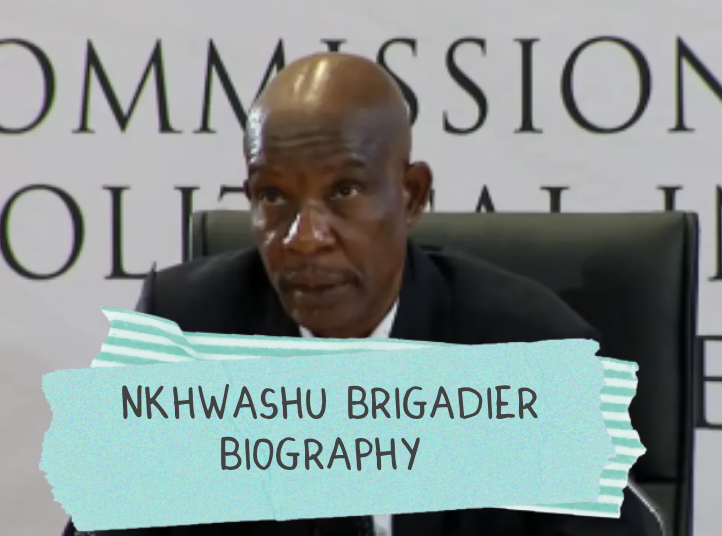
Nkhwashu Brigadier Biography
Brigadier Mbangwa Abby Nkhwashu, also referred to as Brigadier Abraham Nkhwashu or Mbangwa Nkhwashu, is a senior South African Police Service (SAPS) officer with nearly four decades of service. He rose through the ranks to hold key leadership positions in Gauteng province, including roles as station commander, detective commander, and acting district commissioner. His career has been marked by dedication to crime prevention and community policing, yet it has also drawn significant public attention due to recent allegations of interference in high-profile investigations.
As of April 2026, Nkhwashu remains suspended from his position as Deputy District Commissioner of Sedibeng while testifying before the Madlanga Commission of Inquiry. The commission is examining claims of corruption, undue influence, and possible collusion within the police service. His testimony has highlighted tensions between personal relationships and professional duties in law enforcement. Nkhwashu has denied wrongdoing, maintaining that his actions followed instructions from superiors and were not intended to obstruct justice.
Nkhwashu Brigadier Early Life
Mbangwa Abby Nkhwashu was born in rural South Africa during the 1960s, with sources indicating either 1964 or 1966 as the possible year of birth. The exact date remains unclear due to common challenges with birth registrations in remote areas during that era. He grew up in a rural setting, where life revolved around community values, family responsibilities, and the realities of apartheid-era South Africa. These early experiences likely shaped his understanding of social challenges and the need for strong law enforcement to maintain order and protect communities.
Growing up in the countryside exposed him to limited resources and opportunities, yet it instilled resilience and a strong work ethic. Details about his immediate family background during childhood are limited in public records, but his later testimony has referenced extended family ties rooted in traditional customs, including Pondo traditions. These cultural connections have played a role in how he describes certain personal relationships in adulthood.
Nkhwashu Brigadier Age
Brigadier Nkhwashu is approximately 60 years old as of 2026, based on the estimated birth years of 1964 or 1966. This places him in the later stages of a long policing career, where many officers approach retirement after decades of service. His age reflects extensive field experience accumulated over time, from entry-level positions in the 1980s to senior command roles.
Nkhwashu Brigadier Education
Specific details about Nkhwashu’s formal education are not widely documented in public sources. Like many officers of his generation who joined the police force in the mid-1980s, his professional development likely combined on-the-job training with internal SAPS courses on detective work, leadership, and crime investigation. South African police training during that period emphasized practical skills in handling cases, community engagement, and maintaining public safety amid political and social transitions. He would have progressed through various ranks with evaluations and specialized training programs designed to prepare officers for command responsibilities.
Nkhwashu Brigadier Career
Nkhwashu joined the South African Police Service around the mid-1980s, beginning a career that spanned nearly 40 years. He started in entry-level roles and advanced steadily, gaining experience as a detective from 1989 onward. His early work focused on investigative duties, where he handled criminal cases and built expertise in evidence collection and case management.
Over the years, he served in several key positions across Gauteng. These included roles as detective commander in Westonaria, station commander in Bekkersdal, and acting district commissioner in Tshwane. He later became Deputy District Commissioner of Sedibeng, a position that involved overseeing policing operations in a district facing challenges such as violent crime and organized activities. Throughout his service, Nkhwashu earned recognition for contributions to crime prevention initiatives and efforts to engage with local communities. His leadership style often emphasized operational efficiency and direct involvement in district-level strategies.
In his testimony at the Madlanga Commission, Nkhwashu described various duties, including managing dockets and responding to instructions from higher-ranking officers. He highlighted instances where he followed protocols for transferring case files, arguing that such actions were standard rather than improper. His career path illustrates the demands placed on senior officers in a large metropolitan province like Gauteng, where districts handle complex crime patterns and require coordinated responses.
Nkhwashu has also been linked to broader SAPS structures, including interactions with provincial commissioners. He confirmed attending certain private social gatherings, describing them as unrelated to official police work. These aspects of his professional life have come under scrutiny amid broader inquiries into police integrity and accountability.
Nkhwashu Brigadier Achievements
During his long service, Nkhwashu achieved several milestones typical of dedicated police officers. He progressed from basic detective work to commanding stations and districts, demonstrating leadership in high-pressure environments. His involvement in community-oriented policing earned appreciation in some areas for efforts to build trust between law enforcement and residents. He oversaw operations aimed at reducing crime rates and improving response times in assigned districts.
Specific individual awards or public honors are not extensively detailed in available records, but his sustained rise through the ranks to brigadier level reflects consistent performance evaluations and operational contributions. In testimony, he pointed to his record of service as evidence of commitment to the SAPS mandate of protecting citizens and upholding the law. However, recent events have overshadowed these accomplishments, shifting public focus toward allegations rather than past successes.
Nkhwashu Brigadier Recent News
As of April 2026, Brigadier Nkhwashu is at the center of the Madlanga Commission of Inquiry. He has been testifying about allegations that he interfered in the murder investigation of Vereeniging engineer Armand Swart. Claims include attempts to access sensitive dockets, influence bail proceedings, and maintain inappropriate links to individuals connected to the case. One accused, Katiso “KT” Molefe, is described by Nkhwashu as a brother-in-law under customary Pondo traditions through Molefe’s marriage to Fundiswa Nyangule, whom Nkhwashu refers to as his “baby sister.”
Nkhwashu has denied intentional interference. He stated that he acted on instructions from superiors to request dockets and that any prison visit or meetings were not aimed at tampering with evidence. He apologized to the Swart family during proceedings and maintained that he would not have moved dockets if his intent was to obstruct justice. A phone recording played at the commission captured conversations about docket handling. Criminologists and observers have offered mixed assessments of his testimony, with some describing it as defensive.
The commission has led to his suspension as Deputy District Commissioner of Sedibeng. Investigations continue into related claims involving other senior officers. Nkhwashu has also addressed attending social gatherings at a venue known as the “White House,” insisting they were private and unrelated to police duties. These developments have sparked widespread media coverage and public debate about accountability within the SAPS.
Nkhwashu Brigadier Personal Life
Nkhwashu maintains a relatively private personal life outside his professional responsibilities. He has referenced traditional family customs in testimony, particularly Pondo practices that influence how he defines certain relationships. He has described meeting KT Molefe in contexts such as lunch discussions about potential job opportunities in security work as he considered retirement options. Nkhwashu has emphasized that personal ties did not compromise his duties.
He has expressed regret over the impact of allegations on his reputation after decades of service. In public statements during the inquiry, he presented himself as a committed officer following protocols rather than engaging in misconduct. Details about hobbies, daily routines, or non-professional interests remain limited, consistent with the reserved nature often associated with senior law enforcement figures.
Nkhwashu Brigadier Family
Information about Nkhwashu’s immediate family is sparse in public domains. He has spoken about extended family connections, notably the link to Fundiswa Nyangule as his “baby sister” under customary law. This relationship forms the basis for his acknowledgment of Molefe as a brother-in-law, though Molefe reportedly denied the connection in some contexts. Nkhwashu attributed any discrepancies to differing interpretations or statements made by others.
He has not publicly detailed his spouse, children, or parents in depth. Like many public servants in sensitive positions, he appears to separate family matters from professional scrutiny. The ongoing commission has brought some family-related questions into the spotlight, particularly around how personal relationships intersect with policing responsibilities.
Nkhwashu Brigadier Net Worth
Estimating Brigadier Nkhwashu’s net worth is challenging due to limited public financial disclosures. As a senior SAPS officer with decades of service, his earnings would derive primarily from police salary scales, allowances, and possible benefits associated with brigadier rank. South African police compensation for senior positions typically includes housing subsidies, medical aid, and pension contributions. No verified figures for assets, investments, or total wealth have been reported in credible sources. Any speculation would be inappropriate without concrete data, and current suspension status may affect income pending resolution of inquiries.
Conclusion
Brigadier Mbangwa Abby Nkhwashu’s story reflects the complexities of a long career in South African law enforcement. From humble rural beginnings to senior command roles, he navigated the evolving demands of policing in a democratic society. His contributions to crime prevention and district leadership demonstrate the dedication required in a challenging field. However, recent allegations and the Madlanga Commission have cast a shadow, raising important questions about integrity, personal relationships, and institutional accountability.
As the inquiry proceeds, Nkhwashu’s legacy remains in flux. Supporters may view him as an experienced officer caught in complex circumstances, while critics see the case as symptomatic of deeper issues within the police service. Regardless of outcomes, his journey underscores the need for transparency and ethical standards in public institutions. The resolution of these matters will likely influence perceptions of justice and reform in South African policing for years to come. This biography captures available public information as of April 2026, and further developments may provide additional context.
FAQs
Who is Brigadier Nkhwashu?
Brigadier Mbangwa Abby Nkhwashu is a suspended senior South African Police Service officer. He served for nearly 40 years and held positions including Deputy District Commissioner of Sedibeng.
What is Brigadier Nkhwashu’s age and date of birth?
He was born in the 1960s, likely 1964 or 1966, making him around 60 years old in 2026. The exact date of birth is not publicly confirmed due to historical registration practices in rural areas.
Where was Brigadier Nkhwashu born and what is his nationality?
He was born in rural South Africa and holds South African nationality.
What is the Madlanga Commission and why is Nkhwashu involved?
The Madlanga Commission is an inquiry into alleged corruption and interference in police investigations. Nkhwashu is testifying regarding claims of involvement in the Armand Swart murder case, including docket handling and personal links to an accused individual.
Has Brigadier Nkhwashu been suspended?
Yes, he was placed on precautionary suspension from his role as Deputy District Commissioner of Sedibeng pending investigations linked to the commission.
What are the main allegations against Brigadier Nkhwashu?
Allegations include interfering in the Armand Swart murder investigation by requesting dockets, influencing bail proceedings, and maintaining improper connections to a suspect who is reportedly his brother-in-law through customary marriage ties.
How has Nkhwashu responded to the allegations?
He has denied intentional wrongdoing, stating he followed superior instructions and that actions were procedural. He apologized to the victim’s family and described social meetings as unrelated to official duties.
What is known about Brigadier Nkhwashu’s family?
Public details are limited, but he has referenced a customary family link to Fundiswa Nyangule as his “baby sister,” making KT Molefe a brother-in-law under Pondo traditions.
What positions has Brigadier Nkhwashu held in the SAPS?
He has served as a detective, detective commander in Westonaria, station commander in Bekkersdal, acting district commissioner in Tshwane, and Deputy District Commissioner in Sedibeng.
Will Brigadier Nkhwashu face further action after the commission?
Outcomes depend on the commission’s final findings and any subsequent investigations or prosecutions. As of April 2026, he remains suspended while proceedings continue.